🎉 v0.1.2 out now - released 12 hours ago!💫 "Biggest increase in productivity since Cursor" - Luke Harries✨ fix: remote posthog config by @ggordonhall in https://github.com/BloopAI/vibe-kanban/pull/2489🎉 v0.1.2 out now - released 12 hours ago!✨ chore: update remote Cargo.lock by @ggordonhall in https://github.com/BloopAI/vibe-kanban/pull/2490✨ Cargo lock bump by @abcpro1 in https://github.com/BloopAI/vibe-kanban/pull/2493✨ Add timeout to /info when remote unavailable by @stunningpixels in https://github.com/BloopAI/vibe-kanban/pull/2505🎉 v0.1.2 out now - released 12 hours ago!✨ fix: ci permissions by @ggordonhall in https://github.com/BloopAI/vibe-kanban/pull/2506🚀 "This project is underrated. I've found it to be useful and fun" - Hamel Husain🔥 Latest features available in v0.1.2🎉 v0.1.2 out now - released 12 hours ago!⭐ Star us on GitHub to stay updated💫 "Biggest increase in productivity since Cursor" - Luke Harries✨ fix: remote posthog config by @ggordonhall in https://github.com/BloopAI/vibe-kanban/pull/2489🎉 v0.1.2 out now - released 12 hours ago!✨ chore: update remote Cargo.lock by @ggordonhall in https://github.com/BloopAI/vibe-kanban/pull/2490✨ Cargo lock bump by @abcpro1 in https://github.com/BloopAI/vibe-kanban/pull/2493✨ Add timeout to /info when remote unavailable by @stunningpixels in https://github.com/BloopAI/vibe-kanban/pull/2505🎉 v0.1.2 out now - released 12 hours ago!
Upcoming Event

Ultimate Agents Hackathon

Sat, Oct 25 • 9 AM–9 PM ETBetaworks NYC$5k+ prizes

Move faster with
Claude Code

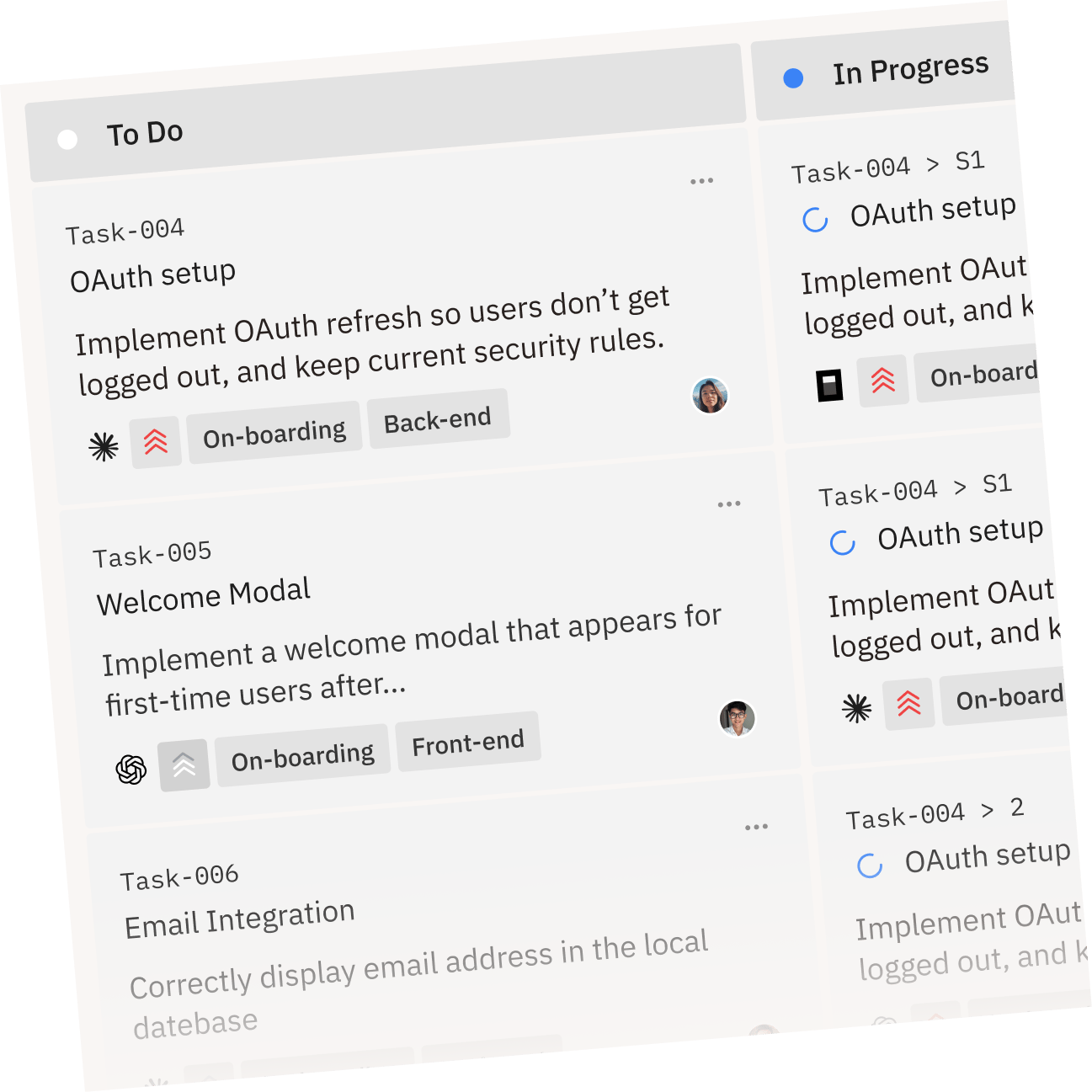
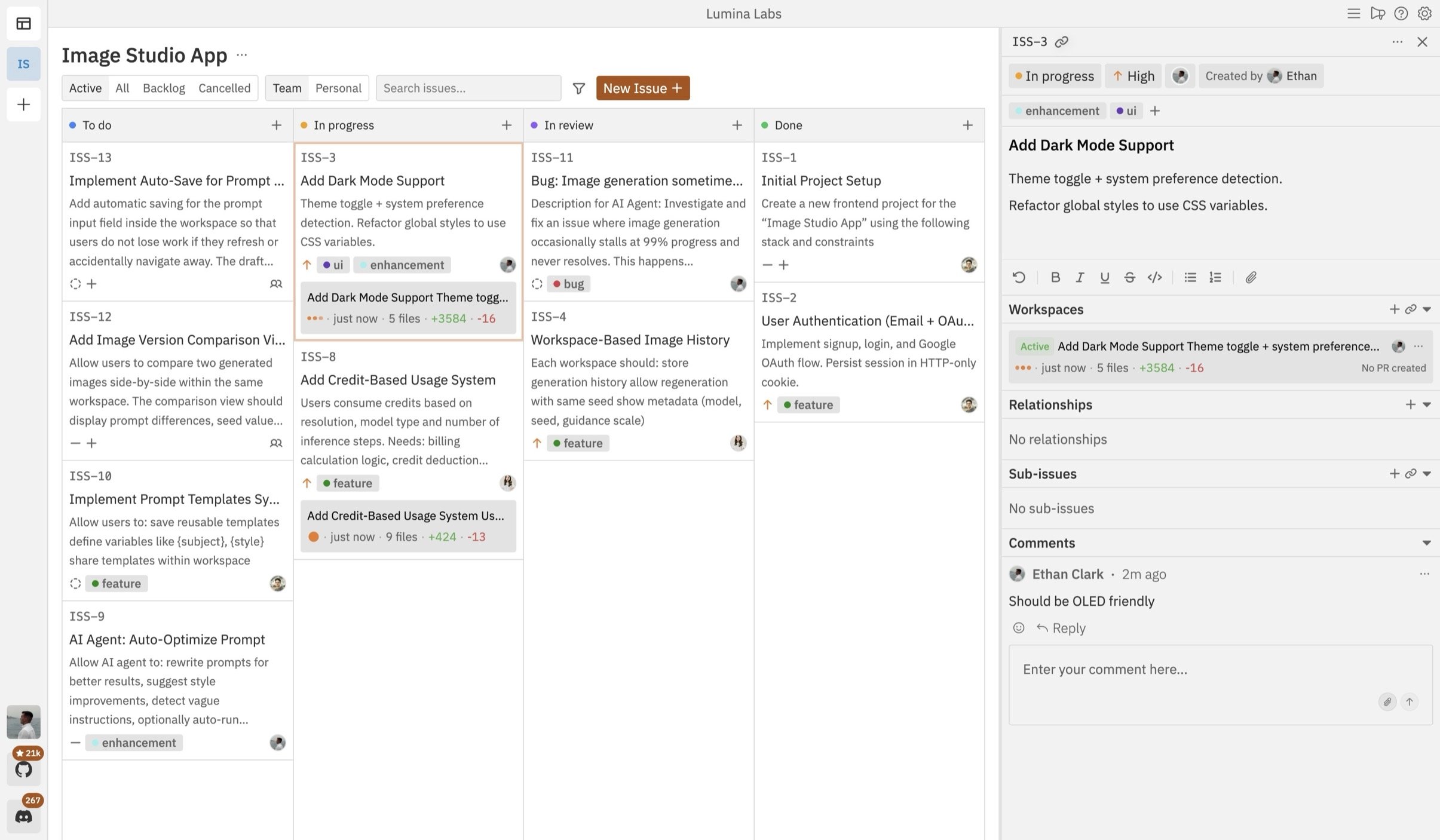
Vibe Kanban lets you run coding agents in parallel without conflicts, and perform code review through our diff tool. Now you can focus on planning and quality instead of watching terminal logs.

Install Node.js 18+ then run:

$npx vibe-kanban
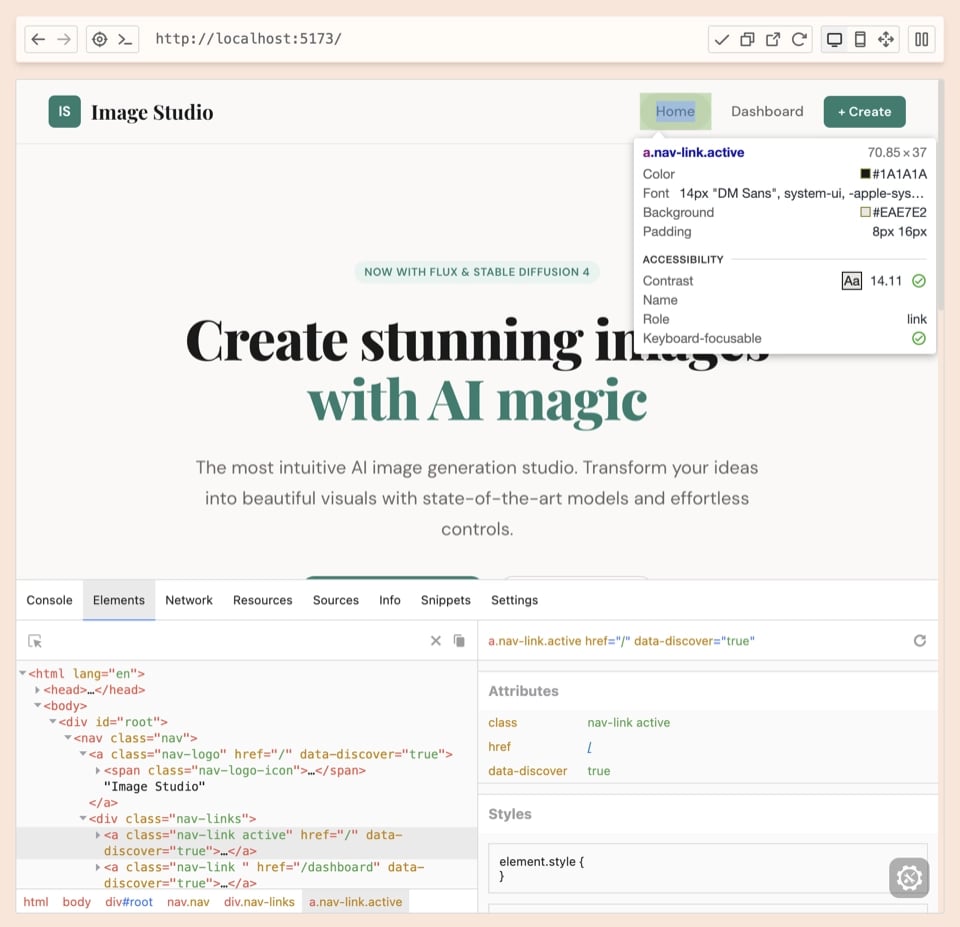
Vibe Kanban task preview interfaceVibe Kanban task preview interface
Vibe kanban is the biggest increase I've had in productivity since cursor.
Luke Harries profile

Luke Harries

Growth Lead at Eleven Labs

Choose Your Coding Agent

Works seamlessly with all your favorite AI coding agents.

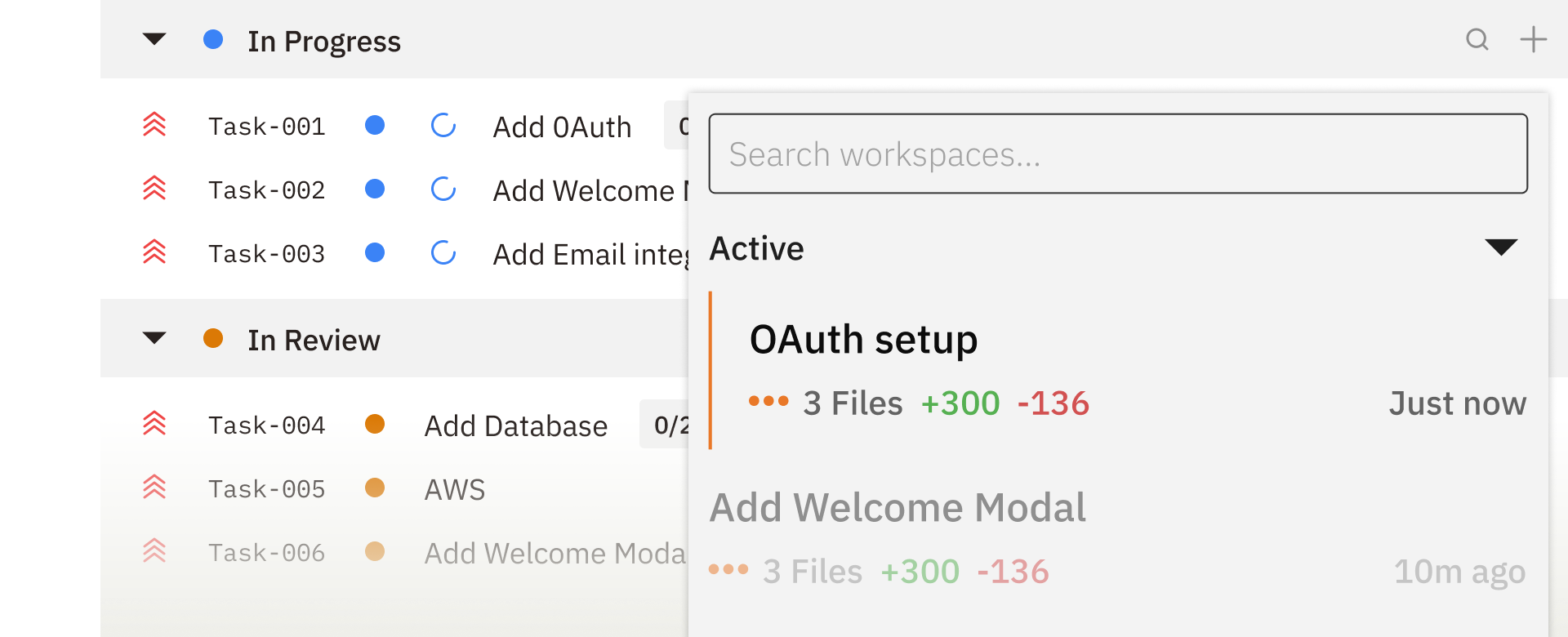
Run local coding agents in parallel

Instead of staring at coding agent logs you can focus on planning and reviewing work while your coding agents work in the background.

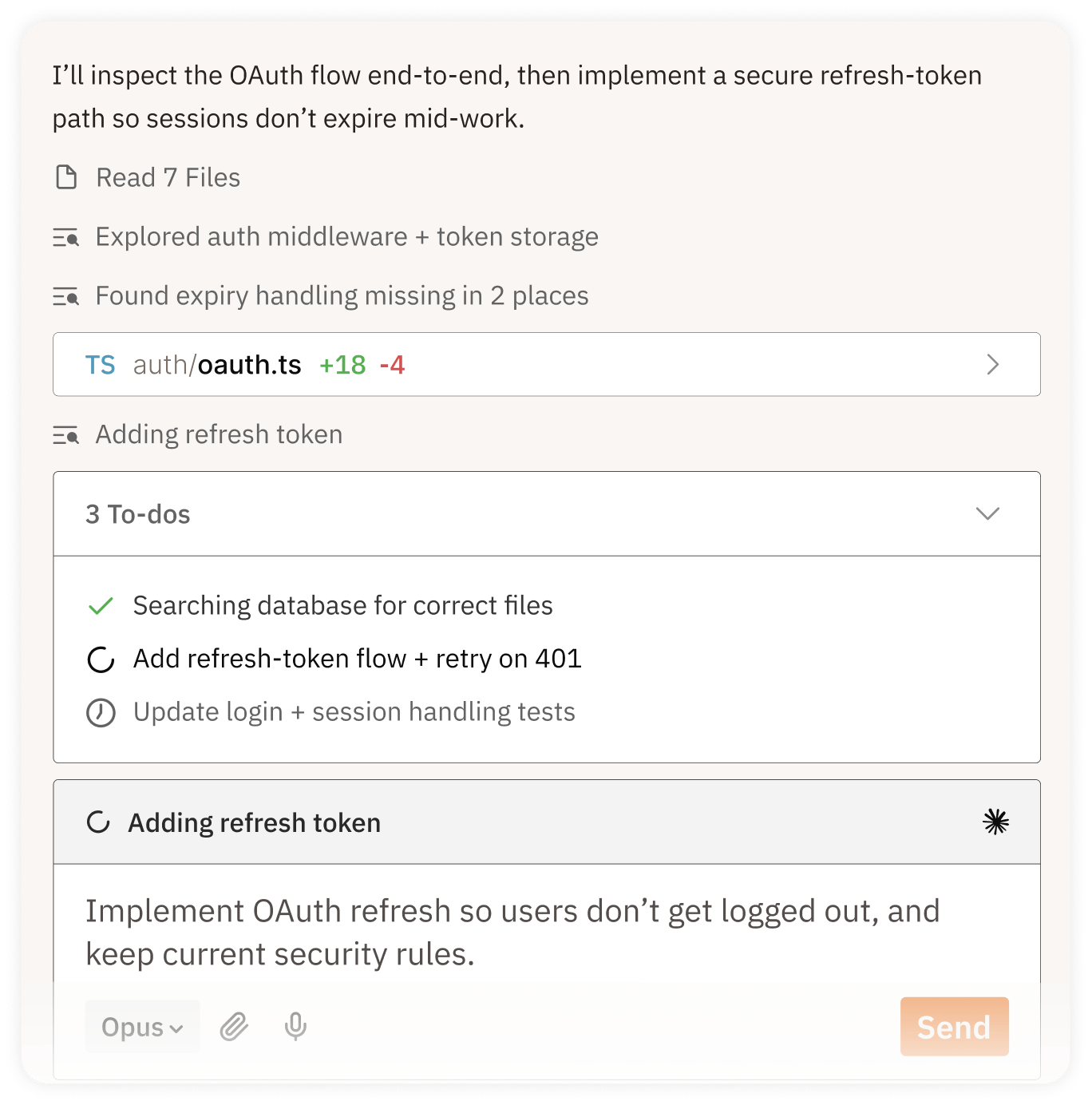
Give agents their own workspace

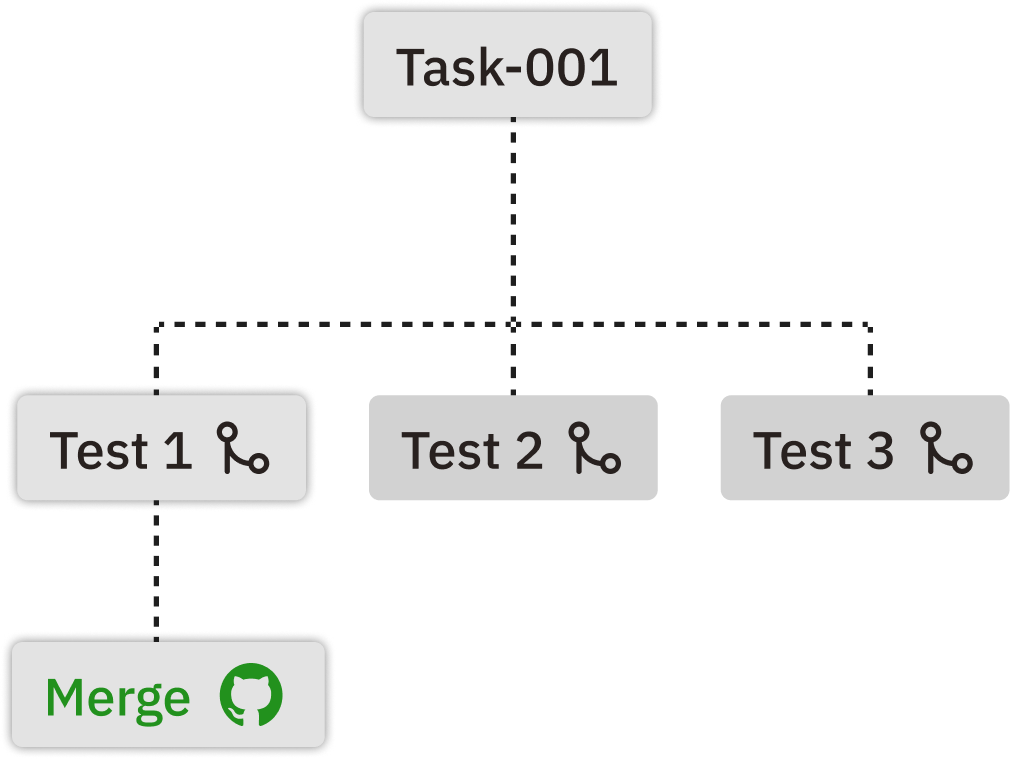
Agents work in separate branches and workspaces on your machine (powered by git worktrees), so they never step on each other's toes during parallel execution. Safely merge changes back when tasks complete.

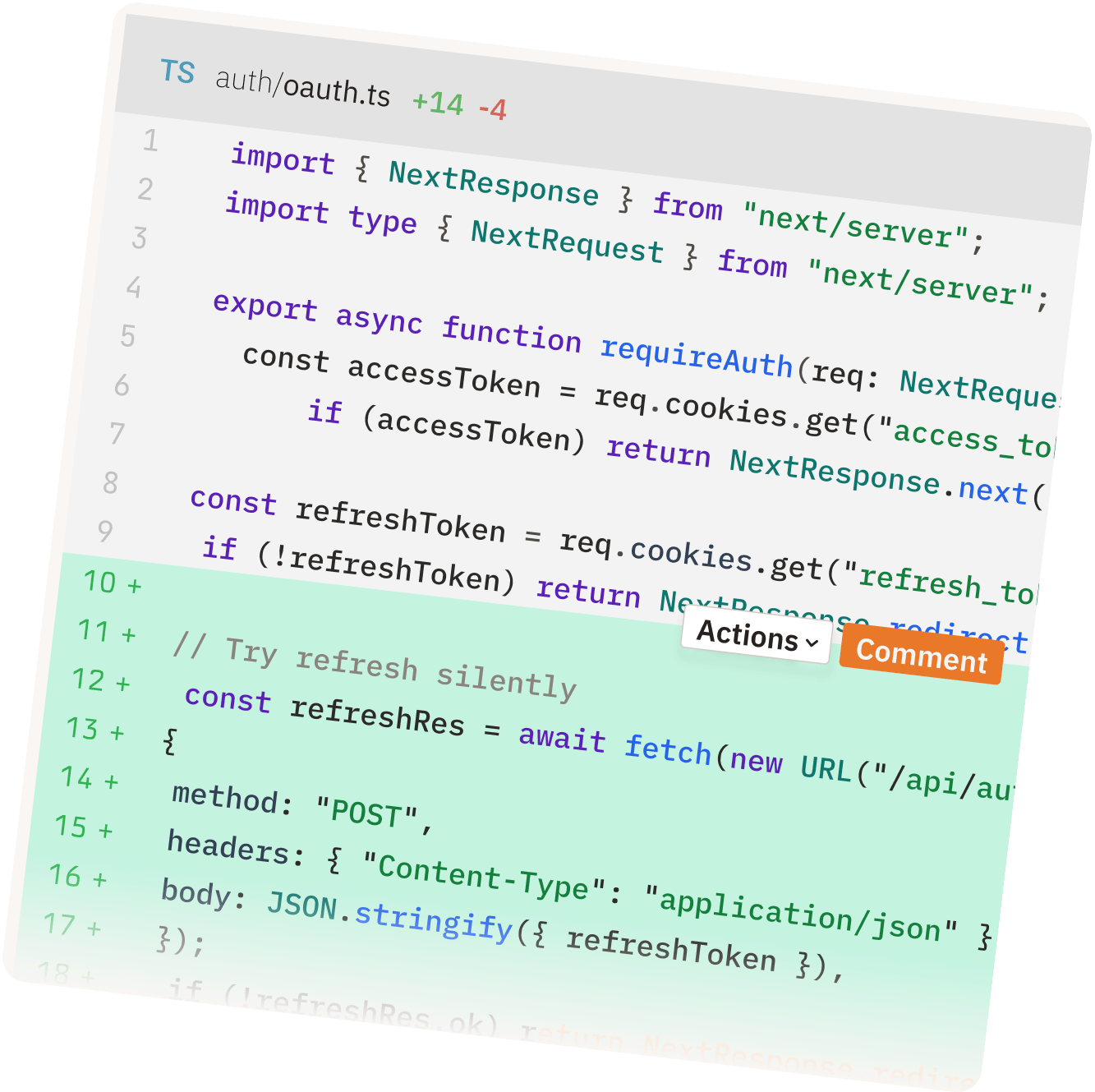
Review agent changes like human code

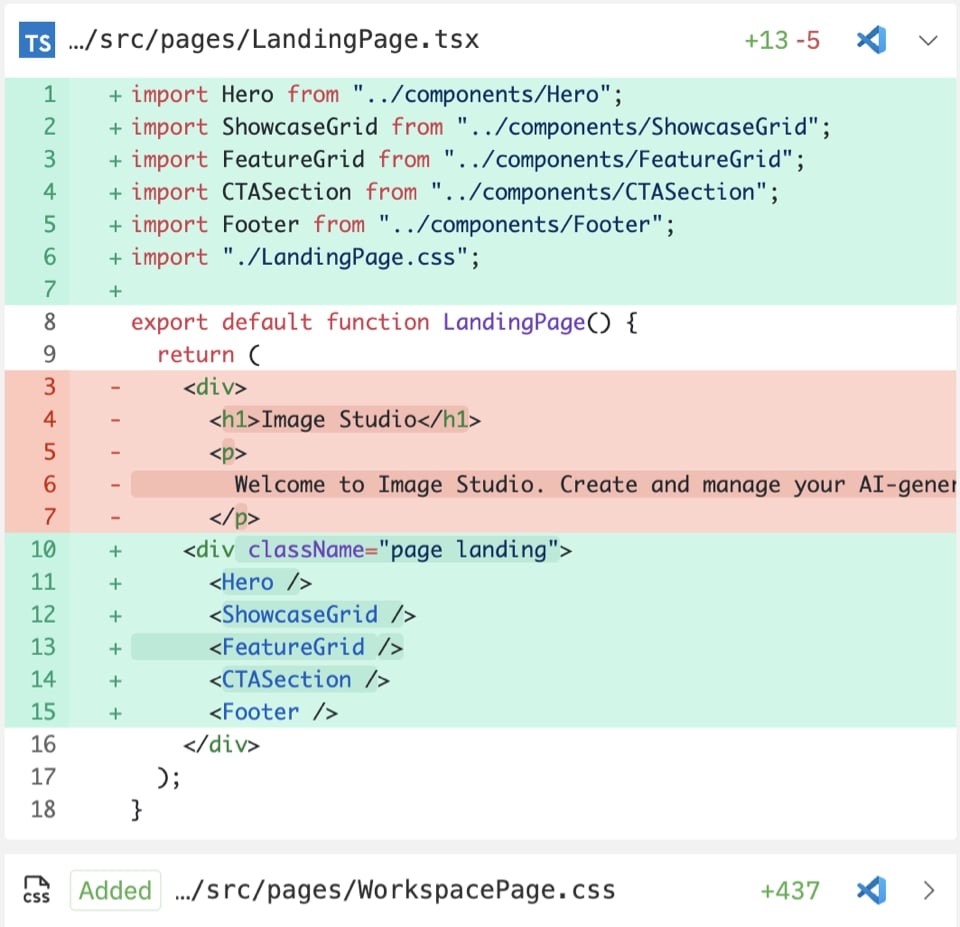
Built-in diffs let you inspect, edit, and approve agent work just like any pull request.

Stay ahead of the curve

Thousands of top developers use Vibe Kanban daily to orchestrate AI coding agents

alamin-mahamud/assetflow
2d
The calculations are not consistent and does not take liabilities as well (vibe-kanban)
## Summary - **Fix double-counting bug**: All report endpoints (dashboard, balance sheet, net worth) were summing segment (parent) account balances alongside their children, inflating totals. Introduced a centralized `CalculationService` that filters `is_segment=true` accounts from all summations. - **Add liabilities to dashboard**: Dashboard now surfaces Total Liabilities as a dedicated stat card and includes a Liability Breakdown donut chart. New metrics: savings rate and debt-to-asset ratio. - **Dashboard inline edit mode**: Asset and Liability stat cards now have a pencil icon that expands an inline editor showing all leaf accounts with editable balance fields. Save updates via API and refreshes the dashboard. - **Documentation**: Added `docs/PRD.md` (full product requirements with 40+ prioritized requirements across 7 feature areas) and `docs/SCHEMA.md` (ER diagram, One Purse hierarchy, calculation architecture, data flow diagrams). ## Changes ### Backend | File | Change | |------|--------| | `backend/app/services/calculations.py` | New centralized calculation service with `get_leaf_accounts()`, `get_net_worth()`, `get_asset_allocation()`, `get_liability_allocation()` | | `backend/app/api/reports.py` | All endpoints refactored to use `CalculationService`; dashboard returns `savings_rate`, `debt_to_asset_ratio`, `liability_allocation` | | `backend/app/schemas/report.py` | Added `savings_rate`, `debt_to_asset_ratio`, `liability_allocation` fields to `DashboardSummary` | ### Frontend | File | Change | |------|--------| | `frontend/src/app/(dashboard)/dashboard/page.tsx` | 6-card stat grid (was 4), edit mode for assets/liabilities, liability donut chart | | `frontend/src/components/dashboard/stat-card.tsx` | Added `onEdit` callback and `suffix` prop | ### Documentation | File | Description | |------|-------------| | `docs/PRD.md` | Full PRD: problem statement, personas, features, calculation formulas, edit mode interaction design | | `docs/SCHEMA.md` | ER diagram, One Purse hierarchy, investment sync flow, current vs target calculation architecture | ## Why The core calculation logic had a double-counting bug: segment accounts (which are derived sums of their children) were being included in asset/liability totals. This meant every dollar was counted twice. Additionally, liabilities existed in the data model but were invisible on the dashboard, and there was no way to quickly update balances without navigating away. ## Test Plan - [ ] Verify net worth = total assets - total liabilities (no double-counting) - [ ] Verify balance sheet totals match dashboard totals - [ ] Verify dashboard shows 6 stat cards including liabilities and savings rate - [ ] Verify pencil icon on Assets/Liabilities opens inline editor - [ ] Verify editing a balance and saving updates the dashboard - [ ] Verify liability breakdown chart renders when liability accounts exist --- This PR was written using [Vibe Kanban](https://vibekanban.com)
alamin-mahamud
alamin-mahamud
Contributor
merged
virtengine/virtengine
4d
devtask: SCALE-002: Horizontal Scaling Architecture (vibe-kanban)
Design and implement horizontal scaling capabilities. Acceptance Criteria: - Provider daemon horizontal scaling documented - Load balancer configuration for RPC endpoints - State sync optimization for new validators - Sharding strategy documented (if applicable) - Multi-region deployment guide - Auto-scaling policies defined Priority: P1-High | Est: 60 hours
jaeko44
jaeko44
Contributor
merged
namuan/task-rider
5d
Add Notes (vibe-kanban)
Add a button which opens up a pop up window for the user to enter free text. The text will be added to the Reminder notes when the window is closed
namuan
namuan
Contributor
merged
alamin-mahamud/assetflow
2d
The calculations are not consistent and does not take liabilities as well (vibe-kanban)
## Summary - **Fix double-counting bug**: All report endpoints (dashboard, balance sheet, net worth) were summing segment (parent) account balances alongside their children, inflating totals. Introduced a centralized `CalculationService` that filters `is_segment=true` accounts from all summations. - **Add liabilities to dashboard**: Dashboard now surfaces Total Liabilities as a dedicated stat card and includes a Liability Breakdown donut chart. New metrics: savings rate and debt-to-asset ratio. - **Dashboard inline edit mode**: Asset and Liability stat cards now have a pencil icon that expands an inline editor showing all leaf accounts with editable balance fields. Save updates via API and refreshes the dashboard. - **Documentation**: Added `docs/PRD.md` (full product requirements with 40+ prioritized requirements across 7 feature areas) and `docs/SCHEMA.md` (ER diagram, One Purse hierarchy, calculation architecture, data flow diagrams). ## Changes ### Backend | File | Change | |------|--------| | `backend/app/services/calculations.py` | New centralized calculation service with `get_leaf_accounts()`, `get_net_worth()`, `get_asset_allocation()`, `get_liability_allocation()` | | `backend/app/api/reports.py` | All endpoints refactored to use `CalculationService`; dashboard returns `savings_rate`, `debt_to_asset_ratio`, `liability_allocation` | | `backend/app/schemas/report.py` | Added `savings_rate`, `debt_to_asset_ratio`, `liability_allocation` fields to `DashboardSummary` | ### Frontend | File | Change | |------|--------| | `frontend/src/app/(dashboard)/dashboard/page.tsx` | 6-card stat grid (was 4), edit mode for assets/liabilities, liability donut chart | | `frontend/src/components/dashboard/stat-card.tsx` | Added `onEdit` callback and `suffix` prop | ### Documentation | File | Description | |------|-------------| | `docs/PRD.md` | Full PRD: problem statement, personas, features, calculation formulas, edit mode interaction design | | `docs/SCHEMA.md` | ER diagram, One Purse hierarchy, investment sync flow, current vs target calculation architecture | ## Why The core calculation logic had a double-counting bug: segment accounts (which are derived sums of their children) were being included in asset/liability totals. This meant every dollar was counted twice. Additionally, liabilities existed in the data model but were invisible on the dashboard, and there was no way to quickly update balances without navigating away. ## Test Plan - [ ] Verify net worth = total assets - total liabilities (no double-counting) - [ ] Verify balance sheet totals match dashboard totals - [ ] Verify dashboard shows 6 stat cards including liabilities and savings rate - [ ] Verify pencil icon on Assets/Liabilities opens inline editor - [ ] Verify editing a balance and saving updates the dashboard - [ ] Verify liability breakdown chart renders when liability accounts exist --- This PR was written using [Vibe Kanban](https://vibekanban.com)
alamin-mahamud
alamin-mahamud
Contributor
merged
virtengine/virtengine
4d
devtask: SCALE-002: Horizontal Scaling Architecture (vibe-kanban)
Design and implement horizontal scaling capabilities. Acceptance Criteria: - Provider daemon horizontal scaling documented - Load balancer configuration for RPC endpoints - State sync optimization for new validators - Sharding strategy documented (if applicable) - Multi-region deployment guide - Auto-scaling policies defined Priority: P1-High | Est: 60 hours
jaeko44
jaeko44
Contributor
merged
namuan/task-rider
5d
Add Notes (vibe-kanban)
Add a button which opens up a pop up window for the user to enter free text. The text will be added to the Reminder notes when the window is closed
namuan
namuan
Contributor
merged

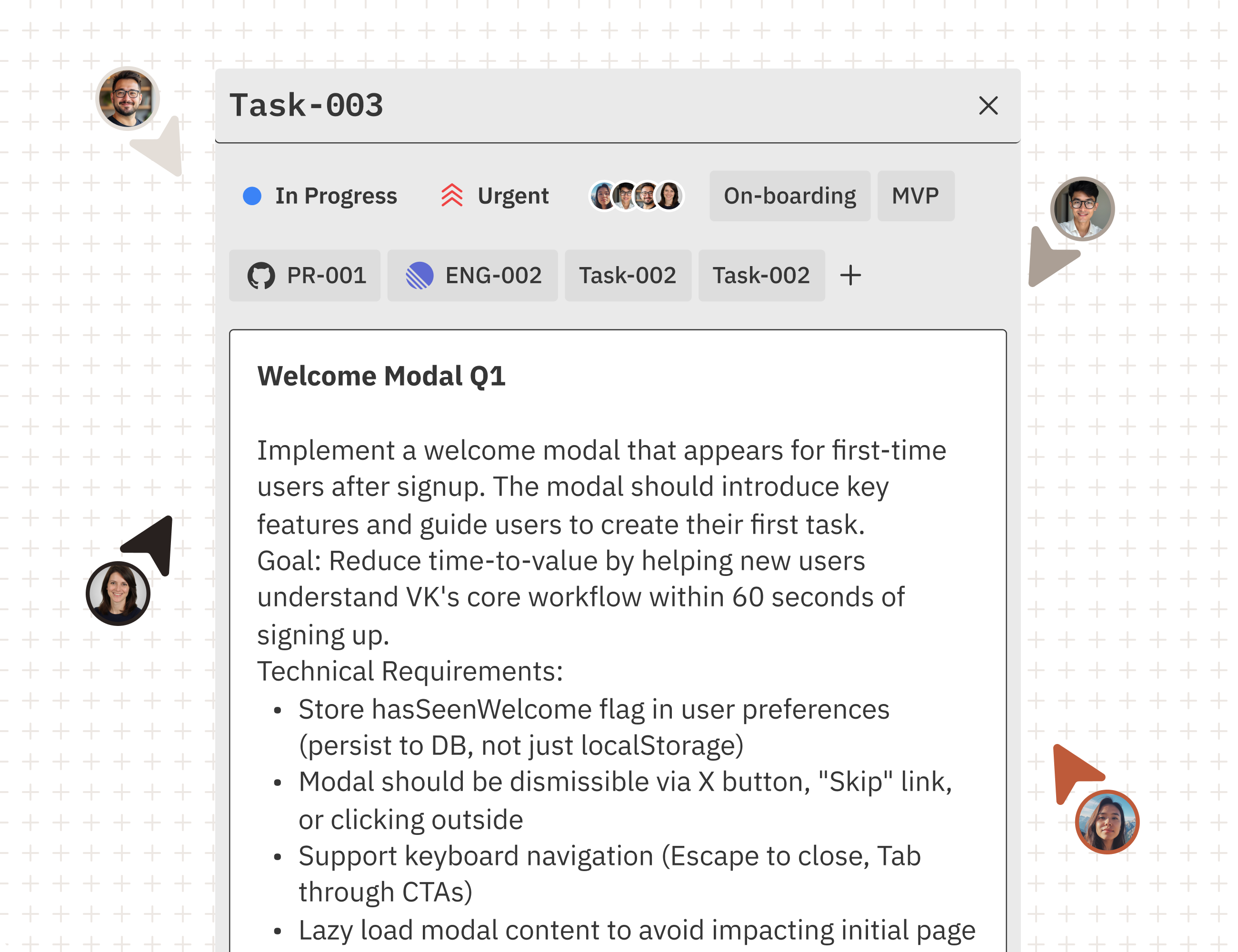
Create tasks from other apps

Connect your favorite MCP client like Claude Desktop to access Vibe Kanban's capabilities directly from your personal AI assistant and extend your workflow beyond the interface.

This project is underrated. I've found it to be useful and fun.
Hamel Husain profile

Hamel Husain

Leading AI Consultant, 20 Years of Experience

Work from your IDE

Monitor agents, interact with them, perform code review, and see running processes directly in your IDE.

Motivation

Coding agents are reliable enough to be the default: We've built and tested coding agents for years and realised recently that reliability crossed an invisible threshold that means we now prefer starting most tasks with coding agents.

Coding agents are going to get much better: Coding agents have improved rapidly, and we expect this trend to continue. Imagine that in six months, 50% of the current failure modes of coding agents will get fixed, and six months after that another 50%. What will we (engineers) be spending our time on in that world? What tools would help us do that work most efficiently?

The SOTA will change: Foundational model labs and application layer startups will continuously leap-frog each other to build state-of-the-art coding agents over the next 12m+. You shouldn't have to change your workflow or behaviour to be able to try out different coding agents.

FAQs

Common questions about Vibe Kanban and how to get the most out of your AI coding agents

Yes, Vibe Kanban runs locally on your machine and doesn't send your code to external servers.
Vibe Kanban supports a wide range of coding agents including Claude Code, Gemini CLI, Cursor CLI, Amp, OpenAI Codex, Qwen Code, Opencode, and GitHub Copilot. You can find the complete list of supported agents in our documentation at vibekanban.com/docs. You can use multiple agents simultaneously and switch between them for different tasks.
Vibe Kanban itself is free and open source. You only pay for the underlying AI services (like Claude Code, OpenAI Codex, etc.) that you choose to use with your agents. There are no additional fees or subscriptions for using Vibe Kanban.
Absolutely! One of Vibe Kanban's key features is parallel execution. You can run multiple coding tasks simultaneously across different agents and projects. Each task runs in its own git worktree on your machine.
The VS Code extension brings the task view into your IDE. Search for 'Vibe Kanban' in the VS Code marketplace and it will automatically connect to your local Vibe Kanban instance.
MCP (Model Context Protocol) works with Vibe Kanban in two ways: First, you can connect MCP servers to your coding agents so they can access external resources and tools. Second, Vibe Kanban itself exposes an MCP server that you can connect to from third-party MCP clients like Claude Desktop, allowing you to seamlessly create tasks from third-party clients.
Yes! Vibe Kanban allows you to create reusable task templates to standardise your development processes. You can define templates for common tasks like bug fixes, feature implementations, or refactoring, which helps boost team productivity and consistency.
Yes, Vibe Kanban has seamless GitHub integration. It can automatically create pull requests after task completion, handle rebases and merges with one-click operations, and maintain clean git history. This makes it easy to incorporate AI-assisted development into your existing workflow.
Vibe Kanban provides real-time monitoring and control over agent execution. You can pause, resume, or stop agents at any time. The system also provides detailed logs and step-by-step visibility, making it easy to understand what went wrong and intervene when necessary.

Ready to get started?

Start managing your AI coding agents with Vibe Kanban.

Install Node.js 18+ then run:

$npx vibe-kanban